Grade 5 students at Keeler using Raspberry Pi's as a form of guided reading practice
A space to connect and share with other Learning Commons in and around the Calgary Area!
Showing posts with label Maker Space. Show all posts
Wednesday, 15 April 2015
Tuesday, 3 March 2015
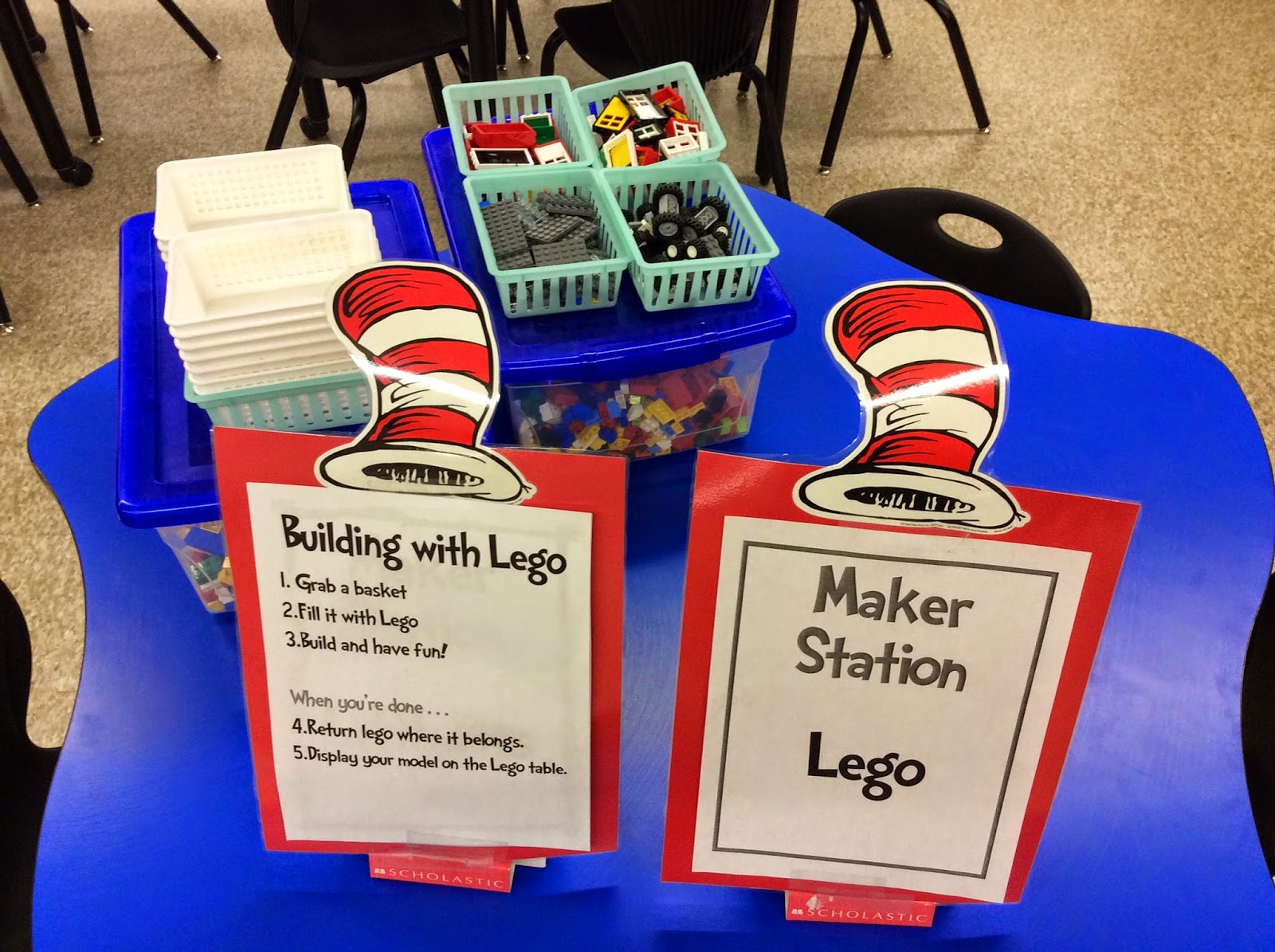
#YYCLC Day113: Lego is awesome!
The students at Chris Akkerman are loving the Lego Maker Station. The next thing will be combine lego with something else. What will be use? Stop Motion? Little Bits? SO many choices!
Thursday, 22 January 2015
#YYCLC Day 89: Focused
Labels:
#cbemaker,
21centurylearning,
Amber Mazur,
Authenic,
CBEmaker,
keeler learning commons,
Maker Space,
studentwork
Friday, 21 November 2014
#YYCLC Day56: littleBits are taking over!
These littleBits are taking over our learning commons. Interest is building fast about these amazingly designed electronic circuit modules.
Wednesday, 12 November 2014
#YYCLC Day 49: Pumpkin Challenge
Labels:
#cbemaker,
#YYCLC182,
Amber Mazur,
keeler learning commons,
Maker Space
Wednesday, 15 October 2014
Creating Maker Stations in the LC
Here's my thinking about how to introduce maker stations to the Learning Commons. Of course it's not the only way but this is how we are attempting to change the culture in our school and to foster entrepreneurial spirit in our students. We would love feed back or comments on how others are doing it!
Tuesday, 14 October 2014
#YYCLC Day30: Duct Tape Art
Labels:
#cbemaker,
#YYCLC,
#YYCLC182,
Amber Mazur,
keeler learning commons,
Maker Space,
Maker Station,
Virtual Learning Space
Tuesday, 16 September 2014
Maker Stations are Open!
Today, our first 2 maker stations are open. Now the fun part begins of inviting kids in to interact with it. In my school, this will be the challenge but I believe it will slowly spread. The teachers seem really excited about the maker space.
The idea at this point is that I will open the Maker Stations up to all students. The younger students may need some guidance at first but our grades 3-5 students should be able to work through the stations. I'm thinking I might train some leaders in each class to help the other students. Then they can pass on the leadership to others' in their class too.
I will also make it known that students can come in and experiment at lunchtime.
As for what students will take photos of, we will link it to the curriculum somehow. We will slowly build a collection of artefacts and/or subjects for students to focus on.
I'm really excited to see where this will take us. I'm not expecting it to take off over night but will continue to work on getting students to come and explore!
Saturday, 6 September 2014
MakerFaireYYC
http://www.makerfaireyyc.ca
I’m presenting today at the MakerFaireYYC in a panel of outstanding CBE teachers and other teachers - I’m more excited about what I can learn than what I have to share! Some questions they have prepared for us are:
- ntroduce yourself and tell us how you’ve brought Maker to your school?
I’m Mike MacKenzie, and I was in the LC at Keeler for a few years. The LC space is a formal library with a student focus that encourages and supports hands-on learning and collaboration. Learning Commons, though, seem to be in a constant state of evolution. As the LC model develops, it has begun to emerge as a place where things (teacher directed and student directed) are being made/practiced. We just facilitate this evolution.
2. Where/how did you connect maker to what you’re teaching?
I taught with students throughout all grades (K-6), often on projects in Social Studies, Science, or Math. Each group was “making things” (zombie shelters and other blueprints in math, parachutes, cars, and airplanes in science, etc.). My role in the LC was to make learning visible and attainable to all students - so maker stations were born. Why should only grade 6 students make parachutes? All kids should get a chance... And with that our maker stations were born. Recess and lunch hour meant kids from across the school could come and build the grade 6 project. And if they got stuck? Grade 6 students were the experts, so they connected with them!
3. What inspired you to want to try maker?
Visual learning... Shared learning... Accessible learning... Kids are entrepreneurial, imaginative, and engaged when they have an environment that is safe, available, and where they can feel free to make (or make mistakes). Kids learn from other kids. When we set up that environment, the learning didn’t stop when kids left the classroom.
4. What were your challenges?
Mess and noise. At the beginning we didn’t set up the expectations for cleaning up afterwards (and the storing of projects), and often it felt trashed. And because we didn’t set a number limit on the kids entering the LC, we had too many kids at lunch. We generally fixed these with time and giving clearer expectations.
5. How did you set up your space physically?
The Learning Commons at Keeler is a big open space with tables on castors that can morph into a thousand different combinations. Eye-Hooks were screwed into bookshelves for pulley stations (4 or 5 throughout), stations were set on top of book shelves and in tubs, and a RaspberryPi was connected to a tv (also on wheels) that was standing only for groups to program.
6. What do you see as the future of maker in Education?
The future of a “Maker” education is potentially enormous. Open challenges presented by students (or teachers), as teachers facilitate and encourage the growth of entrepreneurial spirit... Kids are trusted (and groomed) to be designers. Trust is shown by providing time, materials, and by allowing noise. Students will teach other kids, too. Not in a strictly, “Science Fair” way where only the end product is shown- they will come together throughout the process and celebrate the process and the end products. Assessment, too, will be on competencies and processes where even if an end product doesn’t work, the ideas and creativity will be considered with more weight.
Friday, 16 May 2014
Entrepreneurial Spirit Thrives in the Learning Commons
“Mr. MacKenzie, can I talk to you later? I think we should start a football club”, proposed three boys, eager for organized sport. The day prior, different kids wanted to start an animation club. Before that I was approached by other students explaining that they wanted me to learn how to program video games... And that I should teach them how! How did we, as a school, get here? We got to this point because of the Learning Commons. Our Learning Commons fosters an Entrepreneurial Spirit, and it has absolutely transformed our school culture.
Those kids weren’t interested in programming, animation, or sports because they were told they needed to be- they approached me because they knew the LC supports students: They knew the LC is for them. They had developed an Entrepreneurial Spirit so nothing felt out of reach...All they needed to do was to inquire, to pursue and to remain engaged in the face of failure and closed doors. The students who were seeking out a football club were rejected by me, (Ya, I know...But to be fair I’d already done a hockey and basketball club, and soccer was being scheduled). Where did they go next? To another teacher, then the principal. Not once throughout the process were they dissuaded.
The kids with a craving to learn animation couldn’t find a teacher-expert to guide them, but they asked for the tools. We gave them an iPad with the right apps and after multiple LC lunches, those kids had independently crafted a lego-animation that was proudly shown at the school talent show. It was greeted with laughter, “Oohs!” and “Ahhs!” from an engaged audience.
The programmers were interested in a smaller audience and were intrinsically motivated. They inspired me to find tools for them, and as a result we have a maker-station with the SCRATCH programming language and ongoing, monthly challenges. To be honest, though, they’re ignoring the challenges ... But only because they are making games of their own. Who wants to make a stupid cat jump when you can make a bird dodge objects? How did we, as a school, foster this?
All we did was make a Learning Commons available to students. We gave them tools with no boundaries, we encouraged, we supported, and we nurtured a growth mindset. At lunch, at recess, and during finish-up time, students come in to do, to make, and to create. In our Learning Commons, an “Entrepreneurial Spirit” doesn’t mean starting a business: It means advocating for yourself and your peers, it means caring about something enough to take a chance. Our school’s philosophy is deeply invested in our students’ Entrepreneurial Spirit: We gave kids care, trust, and a space, and we watched them take on challenges. We guided them as they fell down and stood back up, as they persisted with their passions. To me, this is what we should all be looking for. To me, the Learning Commons model is Entrepreneurial Spirit.
Those kids weren’t interested in programming, animation, or sports because they were told they needed to be- they approached me because they knew the LC supports students: They knew the LC is for them. They had developed an Entrepreneurial Spirit so nothing felt out of reach...All they needed to do was to inquire, to pursue and to remain engaged in the face of failure and closed doors. The students who were seeking out a football club were rejected by me, (Ya, I know...But to be fair I’d already done a hockey and basketball club, and soccer was being scheduled). Where did they go next? To another teacher, then the principal. Not once throughout the process were they dissuaded.
The kids with a craving to learn animation couldn’t find a teacher-expert to guide them, but they asked for the tools. We gave them an iPad with the right apps and after multiple LC lunches, those kids had independently crafted a lego-animation that was proudly shown at the school talent show. It was greeted with laughter, “Oohs!” and “Ahhs!” from an engaged audience.
![]() |
| A couple of the 6th grade programmers working through a challenge. |
The programmers were interested in a smaller audience and were intrinsically motivated. They inspired me to find tools for them, and as a result we have a maker-station with the SCRATCH programming language and ongoing, monthly challenges. To be honest, though, they’re ignoring the challenges ... But only because they are making games of their own. Who wants to make a stupid cat jump when you can make a bird dodge objects? How did we, as a school, foster this?
All we did was make a Learning Commons available to students. We gave them tools with no boundaries, we encouraged, we supported, and we nurtured a growth mindset. At lunch, at recess, and during finish-up time, students come in to do, to make, and to create. In our Learning Commons, an “Entrepreneurial Spirit” doesn’t mean starting a business: It means advocating for yourself and your peers, it means caring about something enough to take a chance. Our school’s philosophy is deeply invested in our students’ Entrepreneurial Spirit: We gave kids care, trust, and a space, and we watched them take on challenges. We guided them as they fell down and stood back up, as they persisted with their passions. To me, this is what we should all be looking for. To me, the Learning Commons model is Entrepreneurial Spirit.
Subscribe to:
Posts (Atom)